Thursday, January 01, 2009

Science, Scams and Superstition


These articles of mine address the poor state of science education, the persistent intellectual tyranny of religion, and the consequent lack of critical thinking in our country.
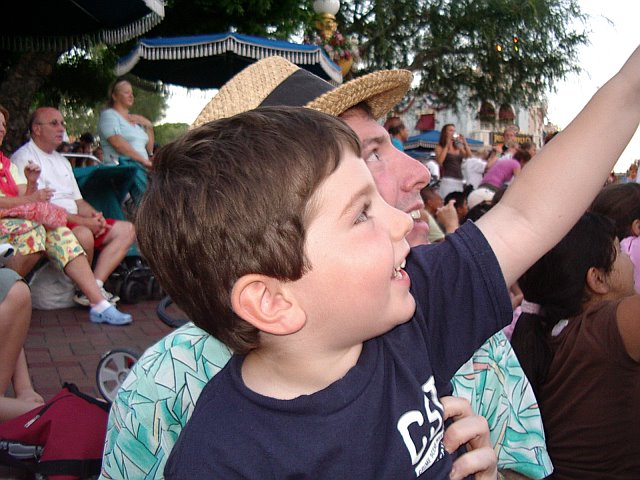
Aug. 27, 2006
They Stood at the Foot of the Mount
My family witnesses the ill effect of group-think on hundreds of Disneyland tourists.


Nov. 7, 2006
Silicon Valley Loves Richard Dawkins
Hear the evolutionary scientist's comments to a Who's Who gathering of techno-stars.

Oct 8, 2009
Praying with Richard to the Flying Spaghetti Monster
Richard Dawkins returns to the Valley to raise funds for Reason and Science, and to sign books at Keplers.
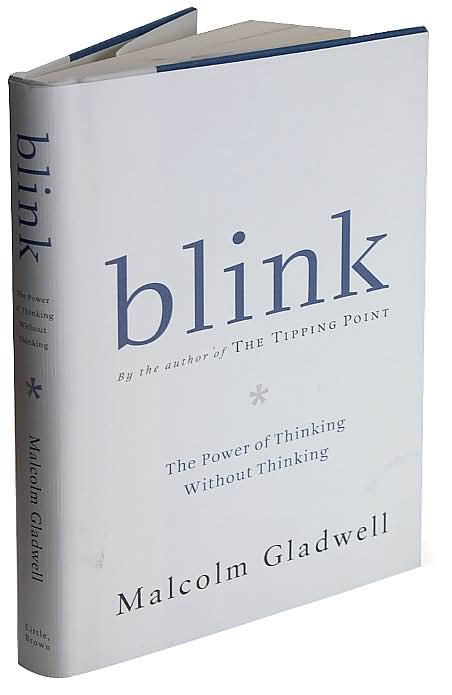

Aug. 5, 2006
Blink: The Nonsense of "Thinking Without Thinking"
A less-than-generous book review of the allegedly non-fiction bestseller, why Goerge Bush likely read this book, and suggested alternative reading.


April 19, 2006
CREATED BY A SCHOOL TEACHER!
Read how a scamming couple turns Airborne, a thoroughly untested medical remedy, into a $100m blockbuster product.

Dec 21, 2006
SCIENTIFIC AMERICAN: Airborne Baloney!
Science mag features my blog.

March 6, 2008
Science prevails! Company loses $23 million verdict in deceptive advertising lawsuit.


A 16 year-old with ADHD busts myths about the mental health epidemic.


October 9, 2008
Militant Avamparists Are So Annoying!
How can you be so sure that vampires and easter bunnies don't exist? Are you really so dogmatic?


January 27, 2008
Con man cashes in on bizarre consipracy theories, and another explains how.
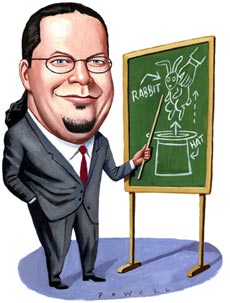


March 26, 2006
Bullshit
Profile of magician Penn Jilette--prompted by my encounter with the celebrity atheist in Vegas--and his expose of bottled drinking water.
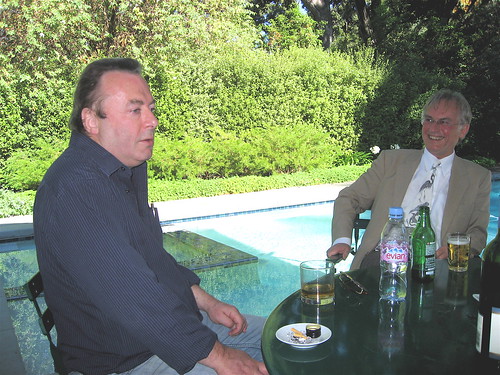


July 18, 2007
Dinner with Dawkins and Hitchens
Recap of Dawkins' encore visit to Kepler's and our dinner with Christopher Hitchens.


January 20, 2007
7-Year Old Critical Thinker
What happens when we encourage children to think for themselves?


Dec. 11, 2005
Limits of Rationality: Beware the Paralimbic Cortex
My college roommate, a behavioral economist at Harvard, illustrates how brain structure distorts human calculus of short term versus long term tradeoffs.


Aug. 28, 2005
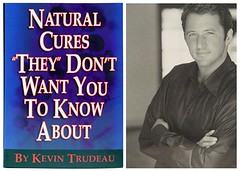
A "Natural Cure" for the Author's Debts
Confidence artist tops the bestseller list by playing on people's mistrust of corporations.


Oct. 7, 2008
Skeptics Sellout to Christians
Leonard Susskind, Mr. Deity, and a Christian walk into a bar... My notes from a Skepctics Society conference at CalTech.


Aug. 16, 2005
The United States of Almighty-God
What does it say about our country when Time Magazine ignores standards of journalism, pandering to Christians with alleged news on mythological characters?


Feb. 10, 2007
Alyssa Milano: Net Neutrality is Like So Cool
A storm of regulation brews, whipped up by vapid sound bites from anti-experts.


Jan. 14, 2007
Cheating Death
Geniuses in Singapore and Sirtris show God who's boss.


March 11, 2007


Reading lists for skeptical grownups and kids.


Oct 27, 2006
Religion: Even Stevphens
Rabbi sends me Daliy Show video featuring Islam v. Christinaity face-off.


Oct. 27, 2006
Richard Dawkins Coming to Kepler's
Profile of evolutionary scientist Richard Dawkins, prior to his standing-room-only book signing at Kepler's Bookstore.


Sept 5, 2006
Shermer Coming to Kepler's
Profile of Skeptic/Professor/Author/Editor/Producer Michael Shermer, prior to his book signing of Why Darwin Matters.


June 20, 2006
China Pulls Ahead
While US Rep. Westmoreland campaigns on the Colbert Report to post the Ten Commandments in Congress, China invites Stephen Hawking to its Great Hall to lead a debate on physics.


Nov. 22, 2005

Kansas School Board More Religious Than Vatican
Vatican Astronomer rips intelligent design theory.


Nov. 2, 2005
Maybe Harriet Wasn't So Bad
Bush nominates devout Catholic Samuel Alito. Children, learn your prayers.


Wednesday, December 24, 2008

I Told You So, Alyssa Milano!

According to the Wall Street Journal, now Google Wants Its Own Fast Track to the internet. So much for Eric Schmidt's public call for network neutrality.

While everyone's who anyone was jumping on the bandwagon (sorry, Alyssa Milano), remember the one maverick blog that called it egregious hypocrisy from the start.... WhoHasTimeForThis?


Blogged with Flock


Mardi Bas

Mazal Tov to my niece Valerie, who is celebrating her Bas Mitzva in New Orleans. We arrived last night in time to watch Kobe score 26 points as the Lakers trounced the Hornets

I'm obviously not a big fan of religious ceremonies, but Val's family has a funny way of celebrating that bucks the trend of over-the-top parties. Instead of congregating all week in synagogue to worship you-know-Who, we're spending the week repairing Katrina-damaged neighborhoods. Today we built and stocked a library for a local public school (I built the shelves in the photo below and my 6-year-old sanded them down). Tomorrow we're installing floors in a condemned home in the lower 9th Ward -- apparently we don't get the day off for either Christmas or Hanukah. Oy.


Blogged with Flock

Monday, December 22, 2008

Tilera: "The Startup To Watch"

This month the Global Semiconductor Alliance recognized Tilera as the Startup To Watch for 2009. Congratulations to founder Vijay Agarwal and his co-founders Devesh Garg (now a partner in Bessemer's Mumbai office) and MIT Professor Anant Agarwal! And kudos to my partner Rob Chandra, who funded and incubated the company in our Massachusetts office.

Tilera has transformed multicore computing by designing a truly distributed chip architecture where each processing core (or "tile") has its own resources such as caches and network nodes. This architecture solves major problems around performance (centralized resources are a bottleneck) and scalability (we're already running 64 tiles on a chip and we'll soon double that). We use industry standard programming tools, running C and C++ code on SMP Linux so it's easy to migrate an existing application to our fully parallel platform. Simply put, Tilera has extended the benefits of distributed computing from PCs down to the chip level.

I'm personally most excited about the impact Tilera will have on security appliances, which increasingly need to process large streams of packets in real time in order to prevent malware, identify predatory behavior, and combat terrorism. Replacing all the FPGAs, DSPs and ASICs in such an appliance, a single Tilera chip is perfect for high volume computational tasks like packet filtering that can be processed in parallel. (Devesh had first recognized this need when he was GM of Broadcom's Security Business Unit.) Tilera fits many other applications as well in processing communications and video (e.g. H.264 codecs) --in fact, we have nearly 50 customers in various stages of design.

The distributed architecture also leads to a greener power profile. By replicating and distributing the circuits, the electron pathways are much shorter, which consumes less power and generates less heat.
Blogged with Flock


Wednesday, November 26, 2008

Ocarina: World's Bestselling Mobile App

Congrats to the Smule team, whose Ocarina has topped the charts for two weeks now (and especially to CTO Ge Wang who is currently profiled on apple.com/pro).

Anyone can quickly learn to play the Ocarina -- hundreds of song sheets for the Ocarina are now available on Smule.com, thanks to users who have composed and uploaded their scores.

Click on the image to hear my son jamming at the Sonic Mule headquarters...


Blogged with Flock

Friday, November 21, 2008

Nov 29: A Capella Holiday Concert

I discovered last winter that the Bay Area is home to one of the world's premier A Capella choruses. Voices in Harmony sings jazz, pop, contemporary, barbershop, and traditional choral music under the direction of Dr. Greg Lyne, a professor from Arizona State and the St Petersburg Conservatory, and guest conductor for the Mormon Tabernacle Choir. Oddly, the group isn't well known locally, but they've been collecting international accolades and acclaim -- most recently winning the bronze medal at the BHS World Championship in July (BHS has 34,000 members worldwide).


Next Saturday afternoon at 3pm on Nov. 29 Voices in Harmony (joined by the Late Show quartet and Pride of the Pacific women's chorus) will perform a holiday concert at the California Theatre in San Jose. There are still a few tickets available, and my friends at the chorus have offered to invite the first group of 4+ people who buy tickets through my blog to a pre-concert VIP wine and cheese reception. (Just leave a comment with your email and name if you think you qualify.)

I have no affiliate code or any other financial interest in this event or the group (it's actually non-profit). I'm just sharing my love for their music. You have to hear them to understand, but if you go, you'll thank me.

Blogged with Flock

Why I Just Invested in Goodmail

How many letters have you snail mailed lately? I think I send about 10,000 emails for every letter I write. So why do enterprises who communicate with millions of customers continue to cut down trees and pay to print letters and envelopes have them physically carried around the world with hundreds of times the cost and latency of email?

The reason for this financial, environmental and logistical absurdity is that you'd have to be nuts to open an email from Bank of America, since most emails that are purportedly from Bank of America are not from Bank of America. They're actually from The I-Need-A-New-Mercedes Bank of Leningrad (or Budapest, or Tel Aviv, or Shanghai...). Furthermore, the ISP who delivers consumer email has no idea which hyperlinks and images are safe, and so as a policy the ISP strips all links, media and scripts from the email, rendering the medium rather useless to you and Bank of America.

The textbook solution to this problem is nearly impossible. You'd have to set up auditing procedures to authenticate all legitimate senders, and monitor the senders' behavior to ensure that they never engage in bad practices like spreading malware or spam. You'd have to examine every script and media object they wish to transmit. You'd have to set up and operate cryptographic infrastructure to establish the integrity of the message from the sender's computer all the way to the inbox (i.e. no added viruses or such). You'd have to convince the ISP's who provide web interfaces to change the way they process their email streams based on the cryptographic tokens attached to the messages. The ISP's would then have to explicitly distinguish for users in their web UI which messages are trusted. And then you'd have to convince businesses that they should pay a transaction fee per email to fund all this infrastructure.

Only one startup was crazy enough to try this. With some amusement, I watched Daniel Dreymann's team for three years trying to line up all these ducks. Suddenly, in September, I heard quacking. Mountain View-based Goodmail had actually signed up ISP's representing over 300 million users (including most of the consumer ISP inboxes in the US and Europe), deployed the necessary cryptographic infrastructure, and delivered over three billion CertifiedEmail messages that month on behalf of Time, StubHub and other commercial and non-profit senders.

Goodmail Systemsâ„¢, Creating  Trust in EmailThat's what I call an industry standard solution to a big problem. So last week I invested in Goodmail and joined the board, alongside Scott Kurnit, Don Hutchison, VCs from DCM, Emergence and Softbank, and GoodMail's new CEO Peter Horan (former CEO of About.com).

It was a pretty easy decision for me, having done okay funding email security companies in the past. Worldtalk, Tumbleweed and ON developed email security and each went public before being acquired. Cyota and Postini developed anti-phishing and anti-spam services, and they sold for great prices to RSA and Google, respectively. And in 1995 I started a little company in our offices called Digital Certificate Inc. to build a similarly ambitious cryptographic infrastructure and ecosystem for securing web sessions (we later changed the name to Verisign).

The cost of sending CertifiedEmail is 0.1% that of sending a paper statement, invoice or brochure, not to mention the environmental imperative. Thanks to Goodmail, businesses can now send CertifiedEmails, and we can all safely open them without wearing rubber gloves.

Blogged with Flock

Wednesday, November 12, 2008

My Halloween Treat: OpenCandy

Despite rumors to the contrary, venture investors are still funding innovative and disruptive startups. My latest Series A investment, announced today, is OpenCandy, which I co-funded with Tim O'Reilly and Reid Hoffman.

Not every (any?) great software application comes from Redmond. Today more than ever individuals and small teams of programmers in every country of the world develop great applications that wither on the vine for lack of visibility and a business model. OpenCandy's technology promises revenue, cheap distribution and free analytics to programmers who may not have their own big marketing departments.

OpenCandy's first product is a recommendations engine that operates in the install wizard of downloaded software. While working for their prior employer DivX, the OpenCandy team discovered that users are far more likely to consider downloading new software while they're in the middle of downloading something else. This observation led them to embed software offers in DivX downloads that now generate $20 million annually for their former employer.

"OpenCandy is taking a proven Web 2.0 model--the ad network--and applying it to software installation. It's very clever. And it will probably work." -- CNET

OpenCandy's recommendations include a mix of free and paid recommendations, depending upon the preferences of the publisher. They do not interfere with the original download, commencing only after the current installation has completed. Here's an example of OpenCandy at work for Miro (a BitTorrent player for RSS video) and Audacity (by far the the best sound recording/mixing tool I've ever used):


Software developers who wish to participate as either a recommender or recommendee should contact co-founder Chester Ng at OpenCandy. He and OpenCandy CEO Darrius Thompson started the company earlier this year. They run a talented but scrappy team in the true tradition of Get Big Cheap. And I'm betting they'll prove that great software is like Halloween candy: you can't eat just one!

Blogged with Flock Browser

Thursday, November 06, 2008

It's a Smule World After All

Having realized a 30X gain on my 1997 investment in Tumbleweed, I'm delighted to be incubating Jeff Smith's next venture, Sonic Mule. After taking Tumbleweed public, Jeff retreated to Stanford in pursuit of his doctorate in classical music; he then joined Bessemer as an EIR, where he conceived Sonic Mule (aka Smule). Jeff recruited Ge Wang (Stanford) and Perry Cook (Princeton) -- two of the world's the most prominent professors in computer-music integration and the inventors of Chuck, an open source language that processes and renders sound in real time.

When Jeff's team isn't cleaning out Bessemer's kitchen, they're churning out ass-kicking Chuck-on-iPhone (CHiP) apps. Sonic Lighter (now in the Campaign edition), Sonic Vox (read Apple's review), and Sonic Boom all exceeded our sales projections -- check out the Sonic Lighter's adoption curve in the video below (this is the coolest board update I've ever gotten).


Today Sonic Mule is releasing their latest and greatest app yet-- the Ocarrina. This is the first fully functional and expressive iPhone musical instrument. A true Occarina, it responds to breath, fingerings, and position. It is easy to learn but allows for nuance and mastery. And you can navigate the globe to listen in on Occarina performances around the world. Check out the video and then buy Ocarina for 99 cents.


And this one's for Legend of Zelda fans...


Update: "Smule has done it again," according to This Is How You Build a Great iPhone App at TechCrunch.
Blogged with Flock Browser

Tuesday, November 04, 2008

The Prospects for SaaS

On Thursday night Bessemer's SaaS practice team Byron Deeter and Philippe Botteri hosted a CFO dinner at John Bentley's in Redwood City, where we discussed the prospects for SaaS in the context of a global recession. My squash gnocchi was delectable, but the portion size was stingy (a sign of the times). Fifteen CFO's participated, about half of whom work at Bessemer portfolio SaaS companies (Cornerstone On Demand, Intacct. Lifelock, LinkedIn, OneStop, Perimeter and Retail Solutions).

The mood could best be described as cautiously pessimistic. Despite hypergrowth in the SaaS industry, the outlook for 2009 is sobering. Among the 13 public SaaS companies, the multiple of enterprise value over current year sales has dropped from 6.6 one year ago to 2.2 today, shaving 60% off market caps year to date. Obviously the market expects growth rates to fall dramatically. SaaS companies grew on average 48% in 2008 but in 2009 Omniture will lead the pack with only 14% growth, according to Goldman Sachs uber analyst Sasa Zorovic, who joined us for the dinner. (Yes, Goldman's SaaS analyst is really named Sasa.)

With slower growth and expensive capital, SaaS companies need to adjust expenses to optimize for cash efficiency, not growth. It's especially important now to assess the profitability of new business, which is tricky in SaaS companies. For each customer, the inflows are the time-discounted billings including expected upsells to the point of expected churn. The outflows equal the sum of upfront sales costs and the time-discounted cost of service delivery and any sales cost for renewals and upsells.

Although we're planning for the worst,  we at Bessemer still believe that the shift to SaaS represents the most important secular shift in enterprise computing since the advent of client-server. The SaaS value proposition of reducing capital expenses as well as total cost of ownership should ring even louder as corporate budgets come under pressure. That's why we predict the downfall of software companies whose addiction to license revenue discourage them from embracing SaaS...
Photobucket
Blogged with the Flock Browser

Sunday, October 12, 2008

Take Back the Web!

When Tim Berners-Lee conceived the web, he dreamed of inter-connected documents, of surfing along from one person's page to the next, following a fluid path rich with information and discovery.

Instead what we we got is a big honkin' billboard, as commercial interests hijacked Tim's vision. Just look at any popular web site today and you'll find only two kinds of hyperlinks -- paid ones and self-referential ones (that keep traffic from leaving the domain). The only relevant links come from portals like Google that monetize search. So instead of deeply browsing the web, we search and click, search and click, search and click... So much for friction-free information and serendipitous discovery.

The web will remain captive to publishers until users exercise control over the hyperlinks that define the web's structure. GreaseMonkey, an open source platform for Firefox scripts, promised some relief to users who want control of their web content and links, but it proved far too esoteric and insecure for mainstream use. The startup Hyperwords also provides some relief to users who wish to right-click on words in web pages to perform an operation like search, blog or email, but Hyperwords requires new user behavior, and does not provide any element of discovery.

So 18 months ago my partner Justin Label and I started cooking up a startup to save the web. We conceived of a platform for creating and distributing mash-ups transparently and securely so that you can pick the news sources, e-commerce vendors, reference materials, social networks, media stores, etc. to which your web pages link. We even hoped to mash your web content with personalized objects (e.g. how closely are you LinkedIn to people you read about?), in-page media (e.g. streaming music) and fewer ads. We called it MashLogic.

Bessemer funded the newco, and we recruited search jock Ranjit Padmanabhan (right) and GreaseMonkey scripter Johan Sundstrom as co-founders. After 15 months in development, we're very excited to release a Beta product today, with 100 invites available here. Beta invites are also available on TechCrunch, where just this morning Arrington reviewed the product quite favorably:

"It's a frickin' swiss army knife for hyperlinks... So far in my testing, they've nailed it... I'm putting this on my must-have list of Firefox add-ons."

Obviously there are still wrinkles to iron out. Today we support both major browsers -- Firefox and Flock :-) -- but of course we'll import the plug-in to IE and Chrome.

To be clear, Mashlogic is NOT like Snap, Flyswat, Adaptive Blue, or any of the other startups who try to convince publishers to embed their javascript. We 're not in this to help publishers by giving them better pages full of ads and self-referential links. We're here for users. Which means that we never inject ads or sponsored links into our callouts, and we never add or remove hyperlinks to suit a publisher. We even let users prioritize sources of information, so that a Wikipedia link might trump TechCrunch, or vica versa. The publisher's original links are kept on by default, but you can subordinate them to the other mashes or turn them off altogether. We don't expect mercenary publishers to like us much.

So how do we plan to make money? Once we restore benevolent hyperlinking to the web, many of the links people choose to embed will relate to e-commerce that pays us affiliate revenue for enabling those links. For example, if you like the Expedia mash that displays and links you to the best fares from your location to any destination you read about on the web, we'll get affiliate consideration. So we're motivated to offer up mashes that you'll want to activate.

We know it's unconventional for big VC's to start with an idea and money and then find the team, but every once in a while the opportunity is important enough to warrant the work. As a plus, this approach means that we get to pick the best team in the world to execute the concept, rather than the team that happened to think of it. (This worked for me once before, when I started VeriSign the same way.)

I could show you screen shots but you really have to try it to get a sense for how MashLogic changes the web (you can partially preview the experience here but today our web site may be super busy). Please do comment with your feedback on the product, and let us know how else you might like to mash the web. Not only will we add lots of new mashes, but we're going to open the platform so that even non-programmers can create and share their own mashes in 5 minutes.

I hope you enjoy the new web on MashLogic, and if you see Tim Berners-Lee, tell him that we've got his back.
Blogged with the Flock Browser

Thursday, October 09, 2008

Militant Avampirists Are So Irritating

Tuesday's post Skeptics Sellout to Christians provoked "M" to comment:

As an agnostic I have read your posts on religion with amusement. Has it occurred to you that a strident atheist is no less dogmatic and irritating than a strident Christian or a strident [your religion goes here]? Who has time for this?

Before I could respond, Peter Harrington commented:

M -- I am also an agnostic, but I think you err deeply in comparing an Atheist to a strident religious person. The worst that a "militant Atheist" will ever do is scoff at religion -- they are far too busy enjoying their one and only life.
In contrast, the worst a militant believer will do is kill you and your family, for the crime of having chosen a different myth (or no myth at all, in the case of agnostics/atheists). Furthermore, I know many Atheists who call themselves that as shorthand for "insofar as I can be sure of anything, I am sure that there is no God" -- this conclusion is not dogma (which implies argumentation by authority), but one based in logic and self-skeptical analysis. I myself prefer the term Tooth-Fairy agnostic as short hand for the same position. Be that as it may, give me a world filled with Atheists any day over Religulous people -- true morality can be achieved only by the non-religious.

Thank you, Peter, for saving me the keystrokes. As for you, M, I love your use of my catch phrase at the end of your comment, but c'mon, am I really no less irritating than dogmatic Christians like Sarah Palin? I would never prevent the use of stem cell therapy to cure disease, or fight wars to spread Christian ideals, or deny loving couples the same rights as their heterosexual neighbors, or legally compel rape victims to bear the children of their violent tormenters. These assaults on people's lives don't irritate you even a tad more than my strident blog (which you can always choose not to read)?

It's simply unfair to characterize atheists as arrogant, militant know-it-alls simply because we believe that deities are as mythical as easter bunnies and vampires. M, don't you ever think someone somewhere is wrong about something, or are you agnostic about everything?

I offer up the following words to describe people based on their beliefs. M, I would be most curious which of these labels describe you...

Paschalepist -- one who believes that on the Sunday following the full moon closest in time to the vernal equinox, a fluffy white mountain hare (of the species lepus timidus) hides chocolate eggs.

Apaschalepist -- a person who does not believe that the Easter Bunny is real.

Vampirist -- one who believes that pale, fanged immortals stalk the night, sometimes in the form of bats.

Avampirist -- a person who thinks that un-dead, bloodthirsty demons are mythical.

Pastafarian -- one who believes that the universe has been created and tended by the great Flying Spaghetti Monster, blessed be His name.

Antipasta -- a person who doesn't believe that the Flying Spaghetti Monster exists.

So are you indeed an apaschalepist, avampirist, or antipasta? If so, how can you be so sure of yourself? How can you be so dogmatic? Wouldn't it be more polite to just profess agnosticism about the Easter Bunny?

Now how would you feel if people derided you for being one of those arrogant militant avampirists? You'd probably think, "Huh? I don't think I'm arrogant. I know I'm not militant. And I'm certainly not trying to distinguish myself as an avampirist. I just don't buy supernatural fairy tales, and frankly I'm surprised that avampirist is even a word."

M, welcome to my world.

Blogged with the Flock Browser

Tuesday, October 07, 2008

Skeptics Sellout to Christians

I spent the weekend at CalTech to attend a Skeptics Society conference. This particular event was titled “Origins: the Big Questions," addressing whether science renders divine faith obsolete. The speakers who drew me there were quantum physicist Leonard Susskind, entertainer Keith Dalton (creator and star of the hilarious and irreverent online series Mr. Deity), and of course Michael Shermer, who founded the society and edits the great Skeptic Magazine.

The Good Part moz-screenshot-15.jpg

The conference began with a real bang – the Big one of course, and a lesson on what preceded that singularity as best understood today by physicists. Susskind condensed his Stanford undergraduate cosmology course into a beautiful one-hour primer on the universal constants (Planck’s, gravitational constant, speed of light…) that support life. It turns out that life can only evolve and survive in a narrow window of values for these constants, a fact that Christians have recently embraced as proof of an intelligent designer. But Susskind explained how quantum mechanics support the existence of a multiverse that regularly spawns new universes with different sets of constants, making it inevitable that our comfy universe should appear. (I asked him whether a future day Dr. Strangelove could create the conditions that spawn a new universe in our own – he said no, but without a compelling explanation.)

millerurey.jpgThe other highlight of the day was Dr. Donald Prothero, who summarized his undergraduate Caltech course on evolution. Prothero first debunked the Christian claims that there are evidentiary gaps in the theories of early evolution on Earth. He walked us through the Fox-Miller-Urey experiments conducted in the 1970’s in which amino acids formed in a simulation of the primordial soup, and identified exactly which elements on earth would have catalyzed the binding of those molecules into proteins and nucleic acids (most likely RNA). He showed us photographs of three billion year old fossils in which these nucleic acids are evident. He then shared Amherst professor Lynn Margulis’ widely accepted theory of how single celled organisms evolved into our cellular organelles like mitochondria, which have their own unique DNA and reproductive processes.

Then he debunked the Christian claim that most modern species appeared “all at once” during the period known as the Cambrian explosion half a billion years ago (hmm, I thought the Lord had dispatched Noah only four thousand years ago). The Cambrian explosion is a dramatic misnomer, referring to a period of above average mutations that actually lasted over 20 million years.

Caltech physicist Sean Carroll delivered a great talk on time’s arrow – how time fits into the universe and how it cannot exist without fluctuations in entropy. He explained how the physical constants give our universe just the right amount of clumpiness so that time can flow, and he presented an alternative theory – consistent with quantum mechanics – on how universes can bear “babies” with differing constants.

We heard from Caltech biologist Christoff Koch on the mystery of consciousness. Although he’s not a Christian, he is arguably a dualist who believes that consciousness may in fact entail a new force not yet discovered by physicist, consistent with the claims of my friend and AI researcher Steven Ericsson-Zenith.

The Bad Part

Had the lunch break in fact marked the end of the event, it would have been perfect. The afternoon sessions were dominated by Christians whose presentations ranged from nefariously clever to stupidly juvenile.

Why did Michael Shermer waste the time of 400 people who traveled to Pasadena on pilgrimage for real science? The only reason I can fathom is that the Skeptic Society could not produce the event without the financial backing of the event’s sponsor, the John Templeton Foundation. This foundation funds programs and prizes that promote the application of science to spirituality. In other words, it’s a Christian I.D. think tank. They obviously insisted on featuring Christian speakers like Paul Davies, to whom they had awarded the Templeton Prize.

For example, Hugh Ross presented the science behind reasons.org, a web site alleging to prove that Jesus is our savior. Hugh’s presentation was colorful and fun, but the logic was about on par with Johnny Cochrane’s “If the glove don’t fit, you must acquit!” Among other “proofs” Ross claimed that Genesis’ 6-day Creation tale jives with evidence of a 14 billion year old universe, since the Hebrew word for day (“yom”) also means a very long time. Except that it doesn’t. (Good thing I attended yeshiva.)

PhotobucketThe lowlight of the day was surely the talk by theologian Dr. Nancey Murphy, and the debate that followed between her and Michael Shermer. Apparently she got her current position because she sat in her “prayer chair” and specifically told her god what kind of position she wanted. It’s very important, she counsels, to be specific with Jesus (after all he’s pretty busy).

During the debate Michael asked her why God hates amputees, since He refuses to answer anyone’s prayer to heal them. Her answer was that she doesn’t know anyone who has prayed on behalf of amputees. Amputation isn’t fatal and doesn’t seem prone to cure, and so limb growth just isn’t something that people pray for. A heckler clarified, “Oh, so it’s Christians who hate amputees!"

In response to a question from the audience, Shermer expressed disappointment that so many scientists fail to think critically. While he said this, Murphy nodded in agreement, completely unaware that Shermer was talking about her.

The conference picked up at the end, when the cast of Mr. Deity -- directed by former Mormon Keith Dalton -- performed live episodes of the brilliant online series that really nails the Big Questions (with no input from the Templeton Foundation). If you haven’t watched it, start with Episode 1…


Update
: Gary Rosen from the Templeton Foundation emailed me to correct my impressions of Templeton. He, and the commenters below, did persuade me that Templeton is not an "ID think tank", and Davies is a Deist but not necessarily Christian. Rather, Templeton tries to reconcile faith with science. Clever, but still nonsense. Faith is belief without evidence, and so pushing it into a skeptics agenda leads to absurdity.

Update 2: One of the commenters on this post finds me irritating and strident because I'm a "militant atheist". I responded in this post (one of my better ones): Military Avampirists Are So Irritating!

Update 3: PZ Myers at Pharyngula evokes a rich discussion on the evils of the Templeton Foundation. (i.e. they funded the Prop 8 anti-gay amendment in California)
Blogged with the Flock Browser

Tuesday, September 16, 2008

Rocket Man

A jetpack wearing hero on the cover of Amazing Stories, August 1928. The cover illustrates The Skylark of Space. Last weekend I took my boys to Hiller Aviation Museum, which hosted a demonstration of an actual jetpack at work. I had thought this was the stuff of science fiction, but this dude actually lifted off , flew down the runway a bit, hovered, returned, and landed. Cool!

Before taking off, he did have to get clearance for his flight plan. As you can see from the vantage of my photo to the left, we stood right near the liftoff point--I was surprised that there was no smoky plume from the rocket fuel, but the noise at ignition was painfully impressive. The operator has to be quite strong to carry the device on his back, and even so he's limited to 30 seconds of rocket fuel.

They wouldn't let me fly the thing, but the museum did bring in a jetpack simulator for the day. Balancing the side-by-side rockets is trickier than I thought, and so my virtual flights all ended in explosive, head-first crashes.

http://livingalaska.files.wordpress.com/2008/03/sarah_palin2.jpgNeverthleless, as the central theme of her energy plan Sarah Palin is now pushing the jetpack as a replacement for automobiles, which "burn all that smelly gasoline." Fortunately, the jetpack I saw burns hydrogen peroxide, which she seems to have in good supply.

Meanwhile, the trip to Hiller inspired my 6 year old to become a pilot himself.


Blogged with the Flock Browser

Tuesday, September 02, 2008

McCain: Creationist Chameleon

Why did McCain select a VP candidate from the state with the fewest electoral votes? Because Sarah Palin is just the religious fanatic he needs to mobilize the Republican vote. Palin, potentially one step away from the Presidency, rejects science at every turn. She would teach creationism in schools, appoint judges who federally outlaw abortion ("even if my own daughter was raped" [sic]), and reject policies that "assume" pollution causes global warming. McCain found the one governor even more Christian than George Bush! Oh, and she won a beauty pageant.

Palin reminds us that despite some hostile court rulings, the intelligent design movement continues to thrive and (ironically) evolve. Louisiana and Texas are currently debating legislation to join the states that teach ID in public schools. If this trend worries you, mark your calendar for Sept 20 from 11am to noon. Cal State science professor Larry Lerner will lecture on "The Creationist Chameleon: Past, Present, and Maybe a Bit of the Future" at the Lucie Stern Community Center, 1305 Middlefield Road in Palo Alto.

I believe there is some kind of supervised children's activity during the lecture, but you can direct questions to Paul Gilbert at 650-906-6704. This event is co-sponsored by the Humanist Community in Silicon Valley and Americans United for the Separation of Church & State.
Blogged with the Flock Browser